Phenol Peel vs Laser Resurfacing: Pros and Cons
Phenol peel vs CO2 laser: both offer deep resurfacing. Compare treatment depth, recovery times, suitability for different skin types, costs, and long-term results for wrinkles and damage.

Page medically reviewed by Mr Vasu Karri, Medical Director and Plastic Surgeon BSc(Hons), MBBS, MSc, FRCS(Plast).
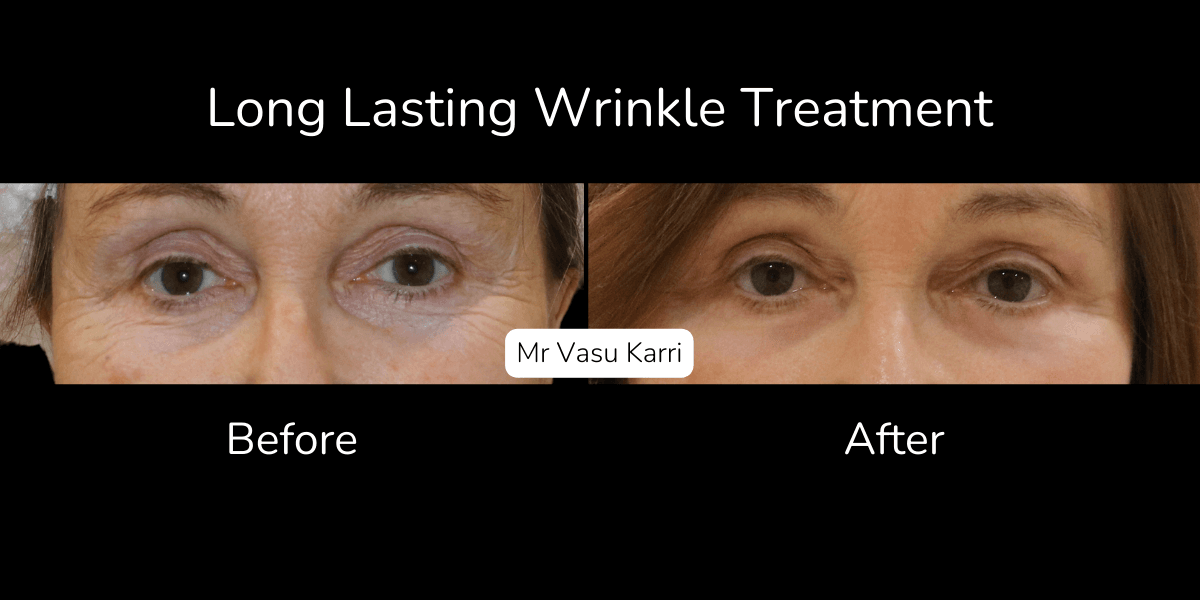
Many of you compare phenol peel vs CO2 laser when looking at deep facial rejuvenation options for wrinkles, sun damage, and scarring. In one upper-lip study, phenol peel reduced mean wrinkle scores from severe (4.20) to barely visible (0.47) at 6 months, while CO2 laser only improved them to 1.11 on the same 0–5 scale, highlighting how powerful deep chemical peels can be for skin resurfacing comparison against lasers.
Key Takeaways
| Question | Short Answer |
|---|---|
| Is a phenol peel stronger than a CO2 laser for wrinkles? | For certain areas such as the upper lip, studies show phenol peels can achieve greater wrinkle reduction than CO2 laser resurfacing. |
| Which has longer downtime: phenol peel or CO2 laser? | Both involve significant recovery, but CO2 laser downtime may include more prolonged redness and discomfort in some studies. |
| Which treatment gives longer-lasting results? | Both phenol peels and fractional CO2 laser treatment can give long-lasting improvement, but phenol peels are often considered the "gold standard" for deep, durable facial rejuvenation. |
| Is phenol peel suitable for all skin types? | No. Phenol peels are usually restricted to lighter skin tones due to the risk of pigmentation changes. |
| Can you access phenol peels in the UK? | Yes. Mr Karri performs phenol peels at Kinvara Private Hospital, Rotherham, South Yorkshire. |
| Are phenol peels more cost-effective than repeat laser? | Phenol peels are often a one-off treatment (for example, a full-face phenol peel can cost around £3000), while CO2 laser may require several sessions, so long-term costs can be similar. |
| Who should you see for a phenol peel in the UK? | You should seek a consultant plastic surgeon or experienced aesthetic doctor who performs this procedure regularly. |
Phenol Peel vs CO2 Laser: How Each Treatment Works
Both phenol peel and CO2 laser resurfacing aim to remove damaged skin layers and trigger new collagen, but they do so in different ways. Understanding this helps you judge laser vs chemical peel results more clearly.
A phenol peel is a deep chemical peel. The practitioner applies a phenol–croton oil solution to the skin, which causes controlled injury to the full thickness of the epidermis and part of the dermis. As the skin heals, new collagen forms and wrinkles, sun damage, and uneven texture improve.
CO2 laser resurfacing uses focused light energy to vaporise (ablate) the superficial skin layers. Traditional fully ablative CO2 removes the entire surface in the treated area, while fractional CO2 laser treatment creates a grid of microscopic columns, leaving surrounding skin intact to speed up healing. Both stimulate collagen, but fractional approaches are usually considered medium–deep rather than as deep as a classic phenol peel.
Skin Resurfacing Comparison: Depth, Results and Treatment Areas
For deep facial rejuvenation options, the depth of treatment is crucial. Phenol peels are usually classified as deep peels, whereas CO2 laser can be adjusted from superficial to medium–deep. Fractional CO2 is often used for moderate wrinkles and acne scarring, while phenol is reserved for more severe ageing changes.
In facial skin resurfacing studies, both treatments improved wrinkles across the face. One trial found that phenol and CO2 laser gave similar outcomes in thin-skinned areas such as the eyelids, while CO2 laser showed a moderate advantage in the upper lip and forehead in that particular study.
Source – JAMA Otolaryngology–Head & Neck Surgery, Comparison of the Laser and Phenol Chemical Peel in Facial Skin Resurfacing
Another study that focused purely on upper-lip wrinkles reported better 6‑month scores for phenol than CO2 laser, which shows that results can vary by protocol and patient selection.
Source – PubMed, Treatment of upper lip wrinkles: CO2 laser vs Baker's phenol peel
Laser vs Chemical Peel Results: What Studies Show
If you are comparing laser vs chemical peel results, it helps to look at the available evidence. While sample sizes are small, there are a few head‑to‑head studies that shed light on how phenol peels stack up against CO2 laser.
In an upper-lip split-area study, phenol peel produced a larger drop in wrinkle scores than CO2 laser at 6 months, with mean scores improving from 4.20 to 0.47 for phenol and from 4.30 to 1.11 for CO2 laser. That means the phenol side moved closer to "no wrinkles" on the grading scale.
Source – PubMed, Treatment of upper lip wrinkles: CO2 laser vs Baker's phenol peel
Another histological study showed that CO2 laser removed more superficial skin initially, but at around 3 months the phenol peel side displayed a thicker zone of new collagen. This may explain why many of you see more dramatic softening of etched-in lines after a deep phenol peel.
Source – PubMed, Histologic evaluation of pulsed CO2 laser vs phenol chemical peels in vivo
CO2 Laser Downtime vs Phenol Peel Recovery
Both phenol peel and CO2 laser resurfacing involve significant recovery, and you should plan time off work and social activities. CO2 laser downtime varies with the settings used, whether treatment is full‑field or fractional, and how large an area is treated.
Fractional CO2 laser treatment typically needs less downtime than fully ablative sessions, often around 5–7 days of visible redness and swelling. Fully ablative CO2 laser may need 10–14 days of healing before you feel comfortable being seen in public, which is similar to phenol peel recovery.
With phenol peels, you can expect around 7–10 days of crusting, peeling and visible healing. Redness often lasts several weeks longer, which is common to both treatments. Your clinician will provide detailed aftercare instructions, including sun protection, ointments, and gentle cleansing techniques.
Skin Type and Suitability: Which Treatment Is Safer for Darker Skin?
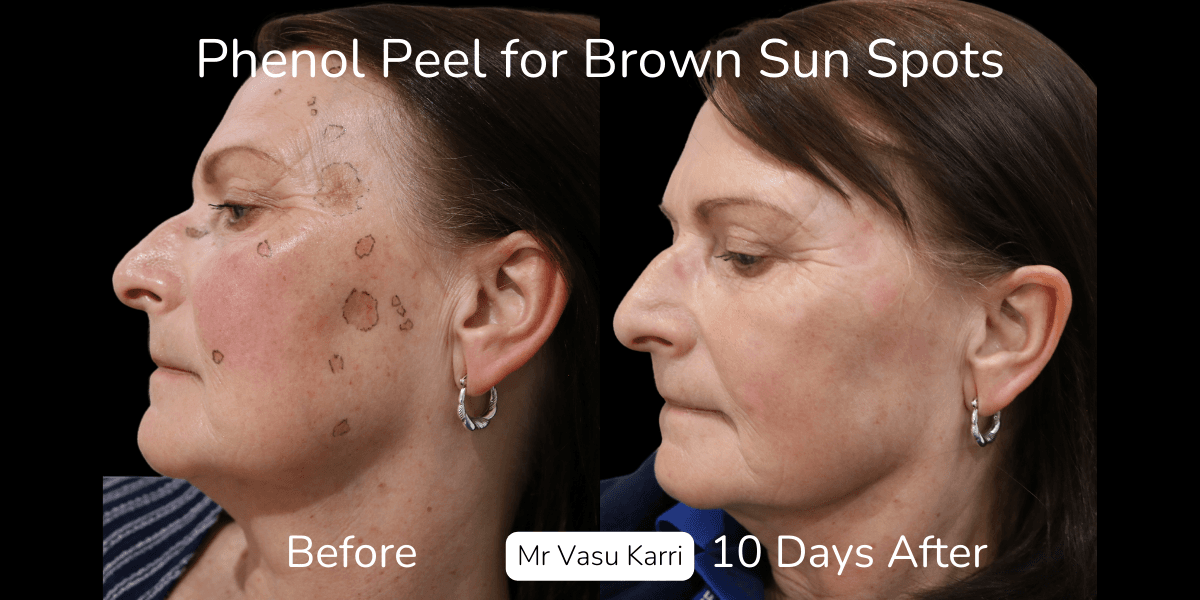
One important skin resurfacing comparison factor is skin type. Phenol peels are generally recommended only for fair to light-medium skin tones (Fitzpatrick I–III) because of the risk of long-term pigment changes, including hypopigmentation (lightening) or hyperpigmentation (darkening).
CO2 laser resurfacing, especially fractional modes, can be used more safely in a wider range of skin types when settings are adjusted carefully. That said, any deep resurfacing procedure carries pigment risk in darker skin, so experienced practitioners will often choose medium-depth peels, radiofrequency, or microneedling for these groups instead.
Phenol Peel Costs and Access in the UK
Phenol peels are specialist procedures and are not widely available in every high-street clinic. At Kinvara Private Hospital, a full-face phenol peel is around £3000, while targeted areas such as lower eyelid wrinkles or wrinkles around the mouth are around £650 each.
If you are weighing phenol peel vs CO2 laser and live outside major cities, you might consider combining your consultation and treatment with an overnight stay. Practices will usually provide detailed pre‑ and post‑treatment instructions so you can continue recovery at home.
What to Expect from a Phenol Peel Procedure in the UK
For those of you leaning towards phenol after comparing laser vs chemical peel results, it helps to know what the process involves. Phenol peels are often performed under local anaesthetic with sedation, or sometimes under general anaesthetic if treating the full face.
Your practitioner will usually mark treatment zones and apply the phenol–croton oil solution in stages, monitoring your skin's response carefully. Modern protocols use timed applications, ointment occlusion, and careful observation to control depth and reduce risks.
After treatment, you can expect swelling, tightness, and crusting as the old skin sheds. You will be given detailed skincare instructions, including cleansing, ointment application, and strict sun protection. Regular follow‑up appointments are an important part of safe recovery.
What to Expect from CO2 Laser Resurfacing
CO2 laser resurfacing procedures vary more widely between clinics because the laser settings and modes can be customised. Your clinician will usually apply a topical anaesthetic cream and sometimes nerve blocks or sedation for full-face treatments.
During the session, the laser handpiece passes over the skin, delivering controlled energy. Fully ablative passes remove the entire surface layer; fractional modes create a pattern of microscopic wounds. You will usually feel heat and a prickling sensation, followed by redness and swelling.
After CO2 laser treatment, oozing and crusting settle over several days. CO2 laser downtime for fractional treatments can range from a few days to a couple of weeks, while fully ablative sessions may need a similar recovery period to a deep phenol peel. Redness can persist for several weeks, so you should plan your social calendar accordingly.
Practical Skin Resurfacing Comparison: Phenol Peel vs CO2 Laser
To help you weigh up phenol peel vs CO2 laser in a practical way, it can be useful to view the main differences side by side. Keep in mind that results are technique‑dependent and vary from person to person.
| Aspect | Phenol Peel | CO2 Laser (inc. Fractional) |
|---|---|---|
| Main use | Deep wrinkles, severe photoageing, etched lines | Wrinkles, acne scars, texture, moderate photoageing |
| Depth | Deep chemical peel | Superficial to medium–deep, adjustable |
| Sessions | Usually one comprehensive treatment | Often several fractional sessions, or one fully ablative |
| Downtime | 10–14 days crusting, weeks of redness | Fractional: shorter; fully ablative: similar to phenol |
| Suitability | Fair skin only (usually types I–III) | Wider range of skin types with careful settings |
| Longevity | Very long-lasting changes for wrinkles | Long-lasting; may repeat fractional sessions over years |
For many of you with advanced photoageing and etched lines in fair skin, a phenol peel can be the strongest single-step option. For those needing a gradual approach, or with darker skin types, fractional CO2 laser treatment may be more suitable.
FAQs: Phenol Peel vs CO2 Laser
1. Is phenol peel more painful than CO2 laser?
Both procedures can be uncomfortable, but you will usually receive strong numbing measures such as local anaesthetic, nerve blocks, or sedation. Discomfort is managed closely during and after treatment, and most patients describe a burning or stinging sensation rather than sharp pain.
2. How long do results last for phenol peel compared with CO2 laser?
Phenol peel results for deep wrinkles are often described as long-lasting, sometimes 10 years or more, provided you protect your skin from the sun and avoid smoking. CO2 laser results can also last for years, but fractional courses may need top‑up sessions over time.
3. Can you combine phenol peel and CO2 laser?
Some practitioners may use different resurfacing methods in different facial zones across separate sessions, but combining deep phenol and CO2 laser on the same area is uncommon because of the risk of over‑treating the skin. Your clinician will usually suggest one primary modality per region.
4. Which is better for acne scarring: phenol peel or CO2 laser?
For most of you with acne scars, fractional CO2 laser treatment or other lasers and medium-depth peels are preferred. Deep phenol peels are usually reserved for severe photoageing and wrinkles rather than scarring alone.
5. How do you choose between phenol peel vs CO2 laser if you are in your 40s or 50s?
Age is less important than the state of your skin. If you have moderate wrinkles, some early jowling, and acne scarring, CO2 laser or a combination approach might work well. If you have deep etched lines and marked sun damage on fair skin, a phenol peel may be discussed as a stronger option.
6. Are results from phenol peel more dramatic than from fractional CO2 laser?
They can be, especially for deep wrinkles on fair skin, because phenol peels treat the full surface in one go and reach a greater depth. Fractional CO2 often aims for more gradual, cumulative improvement with less intense downtime per session.
7. How soon can you wear makeup after phenol or CO2 laser?
Most clinicians allow you to start wearing non‑irritating, mineral-based makeup once the skin surface has healed over, usually after 10–14 days. You should follow your practitioner's specific advice and always combine this with high‑factor sunscreen.
Conclusion
Choosing between phenol peel vs CO2 laser is about matching the treatment to your skin type, concerns, and tolerance for downtime. Phenol peels offer powerful, long-lasting improvement in deep wrinkles and severe photoageing in fair skin, often in a single procedure.
CO2 laser, especially fractional CO2 laser treatment, provides a flexible option for a wider range of skin types and concerns such as acne scarring and moderate ageing, often through a series of sessions with adjustable intensity. Both options carry risks and need expert assessment and aftercare.
If you are in the UK and considering deep facial rejuvenation options, you may find it helpful to book a consultation with Mr Karri at Kinvara Private Hospital to compare your likely laser vs chemical peel results in detail and choose the approach that best aligns with your goals, lifestyle, and medical background.
Mr Karri's phenol peel practice draws patients nationwide, serving patients from major cities and towns across England, Scotland, and Wales:
Bedfordshire | Berkshire | Bristol | Buckinghamshire | Cambridgeshire | Cheshire | Cornwall | County Durham | Cumbria | Derbyshire | Devon | Dorset | East Sussex | Essex | Gloucestershire | London | Manchester | Hampshire | Herefordshire | Hertfordshire | Kent | Lancashire | Leicestershire | Lincolnshire | Merseyside | Norfolk | North Yorkshire | Northamptonshire | Northumberland | Nottinghamshire | Oxfordshire | Shropshire | Somerset | South Yorkshire | Staffordshire | Suffolk | Surrey | Tyne and Wear | Warwickshire | West Midlands | West Sussex | West Yorkshire | Wiltshire | Worcestershire | Birmingham | Leeds | Sheffield | Liverpool | Newcastle | Nottingham