

Page medically reviewed by Mr Vasu Karri, Medical Director and Plastic Surgeon BSc(Hons), MBBS, MSc, FRCS(Plast).
Expert Phenol Peel Treatment
Historical phenol peel protocols sometimes involved applying tape or masks after the solution application, based on beliefs about enhancing penetration or results. Modern understanding and practice have largely abandoned these techniques for several important reasons. The tape or mask prevents direct visualisation of the healing skin, making early problem identification difficult or impossible. Any occlusive covering increases the risk of infection by creating a warm, moist environment ideal for bacterial growth. The discomfort of wearing tape on freshly peeled, sensitive skin adds unnecessary suffering to an already challenging recovery. Most importantly, the depth of peeling is determined during application by the croton oil concentration and technique used, not by what happens after the solution is neutralised by tissue proteins. Occlusion does not enhance results and may increase complication risk. The open technique, where peeled areas are kept moist with antibiotic ointment but otherwise exposed to air and visual inspection, has proven superior. This approach allows the wound to be constantly monitored, desquamation and epidermolysis to progress naturally, and any problems to be identified immediately. The patient can apply ointment as needed for comfort and moisture without the claustrophobia and discomfort of facial coverings. At Kinvara Private Hospital, the open technique is standard, reflecting current best practices in phenol peel aftercare.
Phenol Peel Services for Suffolk Patients
Patients from Suffolk find our Rotherham hospital offers specialist phenol peel treatments with a personalised approach. Mr Vasu Karri's expertise attracts many patients from Ipswich, Bury St Edmunds, Lowestoft, with the 2 hours 59 minutes journey proving worthwhile for those seeking experienced care. If you are considering phenol skin peel treatment, our facility provides a professional environment where your questions are answered fully. Many Suffolk patients value the focused attention and time dedicated to understanding their individual needs.
How to Reach Us from Suffolk
Kinvara Private Hospital in Rotherham is easily accessible by car or public transport
By Car
2 hrs 59 min
Approximate driving time
209km via A1(M)/M1
Free parking available at hospital
By Train
2 hrs 25 min
Total journey time
From Ipswich Station
Then 15-min taxi to hospital
Hospital Address
Kinvara Private Hospital
2 Clifton Lane
Rotherham
S65 2AJ
Phenol Peel Suffolk
Mr Vasu Karri provides phenol skin peel treatments for patients travelling from Suffolk and surrounding areas. He specializes in deep facial rejuvenation to effectively address a variety of skin concerns, helping you achieve a dramatically revitalized appearance.
What is a Phenol Skin Peel?
A phenol peel is a powerful, deep chemical peel considered the "gold standard" in facial rejuvenation. The modern phenol-croton oil peel is highly versatile and can be used on most adult skin types (except dark and black skin) to achieve long-lasting results.
While the benefits of the peel were initially attributed to phenol, it is now understood that croton oil is the key active ingredient that drives the peeling action. Nevertheless, the term 'phenol peel' has stuck!
History of the Phenol Peel
The history of the phenol peel is fascinating and spans nearly a century. From the turn of the 20th century, "lay peelers" or "skinners" operated beautifier salons, and by the 1920s, they were using croton oil-phenol formulas in Hollywood. These lay practitioners were recognised for their expertise, and some doctors even sought them out for treatment.
In the mid-1950s, doctors became interested in face peeling, but for many years, they incorrectly focused on phenol as the active ingredient, without recognising the intense cytotoxic effect of croton oil. The formulas used today are a result of this evolution in understanding, allowing for a more controlled and effective treatment.
How Phenol Peel Works and What It Treats
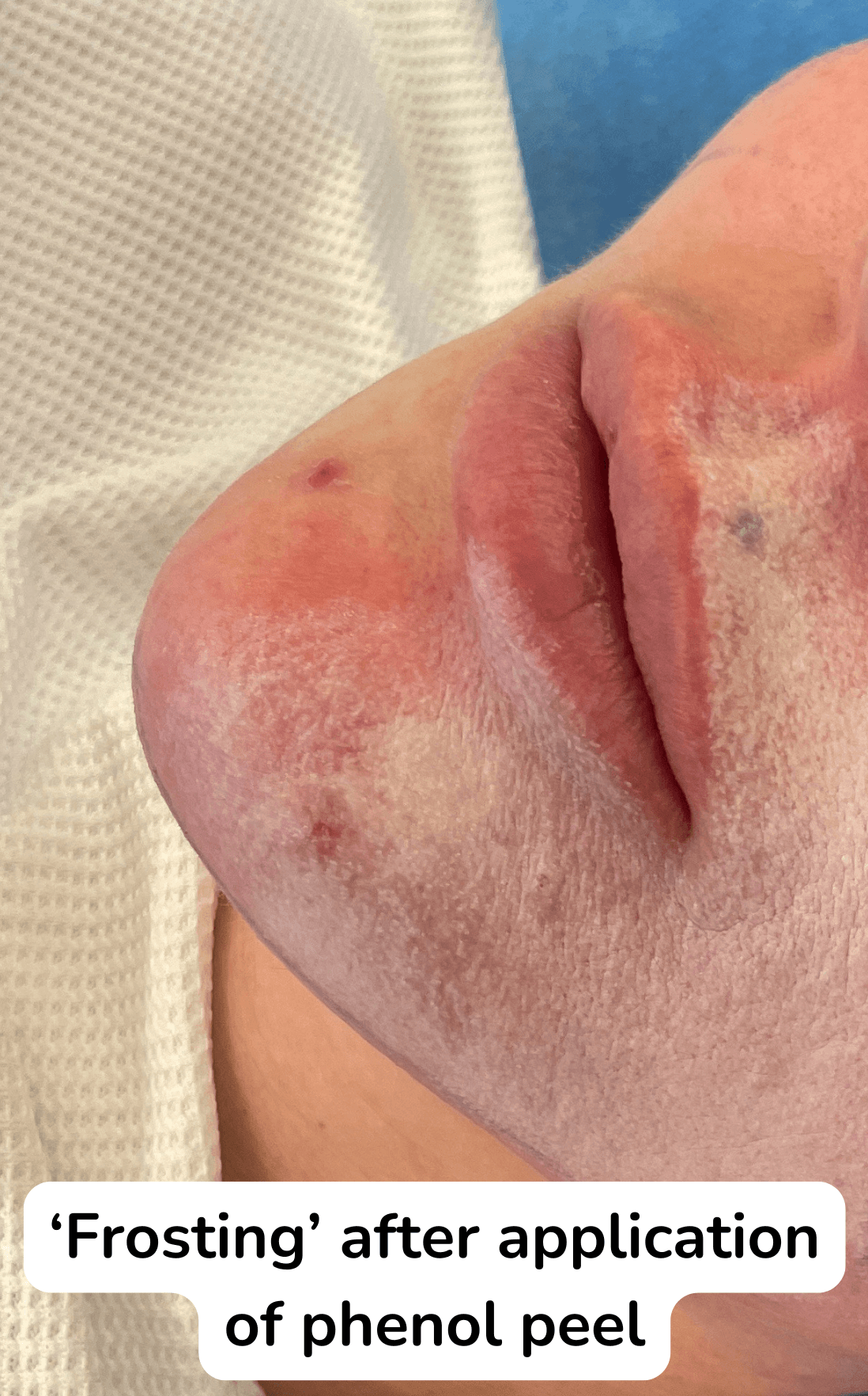
The phenol peel works by causing a controlled wound to the skin, which stimulates the regeneration of new, healthier skin. This process is highly effective in treating a range of significant skin concerns, including:
- Facial Wrinkles and Lines (Rhytides) - A phenol peel can cause a dramatic reduction in fine wrinkles.
- Severe Sun Damage (Photoageing) and Age Spots (Solar Lentigines) - It is an excellent treatment for advanced photoageing, improving pigment changes and clearing age spots.
- Uneven Skin Texture and Tone - The resurfacing action of the peel leads to a more even and smooth complexion.
- Acne Scars and Skin Imperfections - By promoting skin regeneration, the treatment can significantly improve the appearance of acne scars and other textural irregularities.
- Precancerous Skin Lesions - Phenol peels have been shown to be effective in treating precancerous skin conditions.
Potential Risks and Recovery
While modern phenol peel has made the procedure safer, there are still potential risks, including hypopigmentation (loss of skin color) and prolonged redness.
The healing time varies depending on the concentration of the croton oil used. For example, peels using a lower concentration generally heal within 7 days, while higher concentrations (over 1%) may take longer and have a greater risk of pigmentation loss.
Why Choose Mr Karri for Your Phenol Peel?
Mr Karri provides comprehensive care from your initial consultation through to your full recovery. His experience with the precise application and control of the phenol peel is crucial for achieving an optimal and safe outcome.
Learn more about the treatment, view pricing, or read our recovery guide.
Serving Patients from Suffolk and Surrounding Areas
Mr Karri welcomes patients from across Suffolk, including Aldeburgh, Beccles, Brandon, Bungay, Bury St Edmunds, Clare, Eye, Felixstowe, Framlingham, Hadleigh, Halesworth, Haverhill, Ipswich, Kesgrave, Leiston, Lowestoft, Mildenhall, Needham Market, Newmarket, Saxmundham, Southwold, Stowmarket, Sudbury, Woodbridge.
We invite you to contact us today to book your consultation and discover how a phenol peel can help you achieve the youthful, radiant skin you've been seeking.
Frequently Asked Questions - Suffolk Patients
Common questions from patients travelling from Suffolk to Kinvara Private Hospital in Rotherham
Get in touch
Speak to a member of our team for further information or to arrange a consultation.