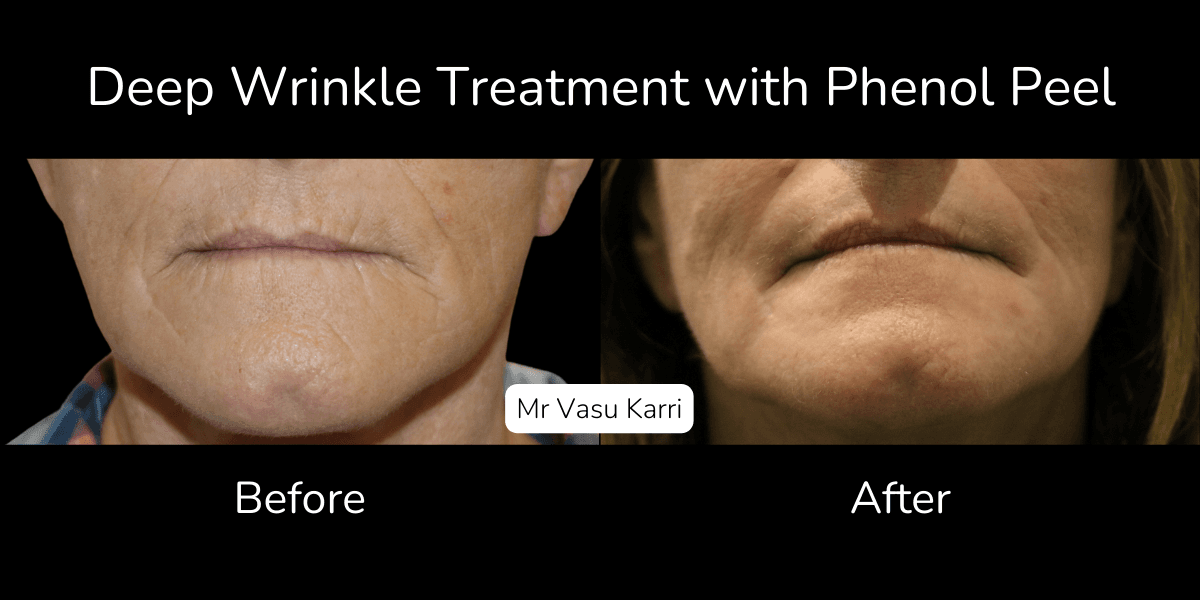
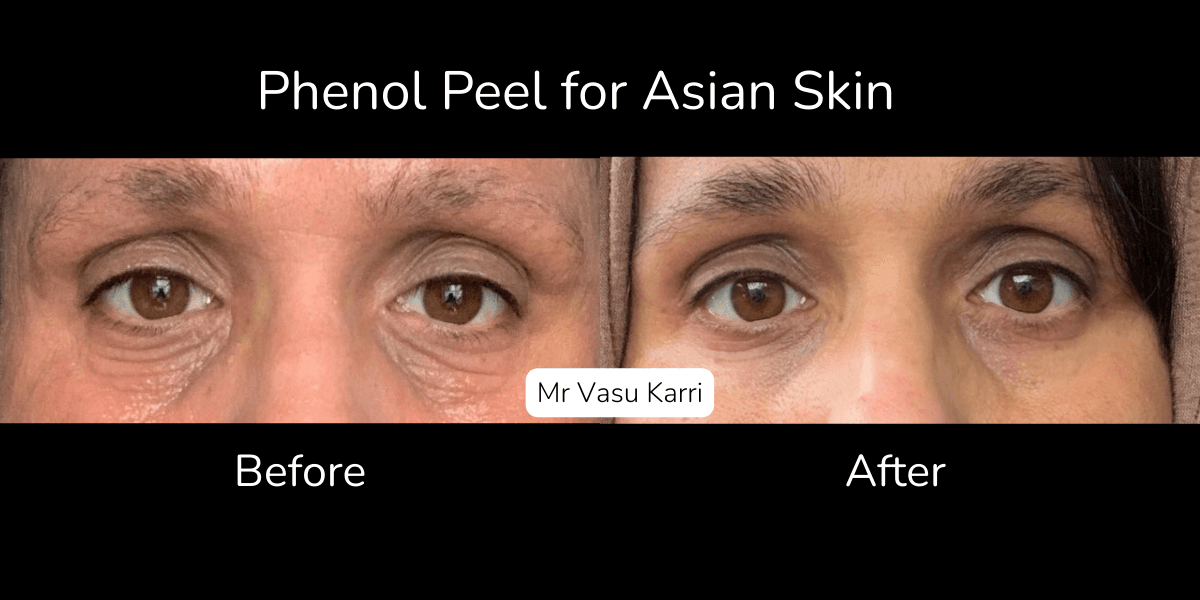
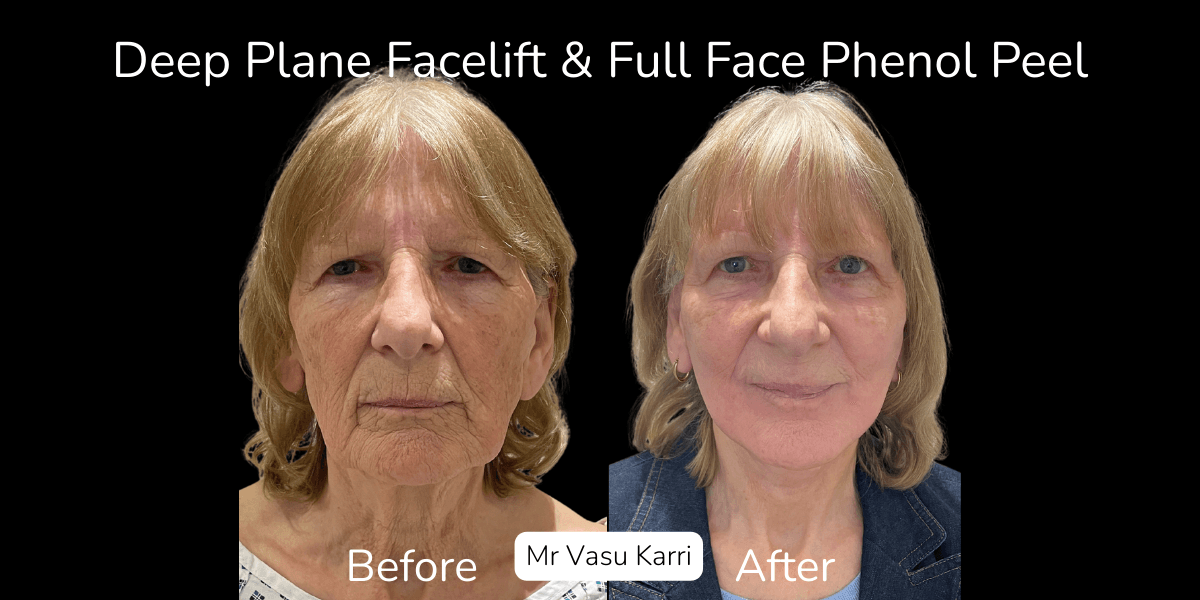
Phenol Peel for Acne Scars: What to Expect
Phenol peels can improve severe atrophic acne scars by 50-75%. Learn how deep peels, CROSS technique, and combination approaches resurface skin and stimulate collagen for scar reduction.

Page medically reviewed by Mr Vasu Karri, Medical Director and Plastic Surgeon BSc(Hons), MBBS, MSc, FRCS(Plast).
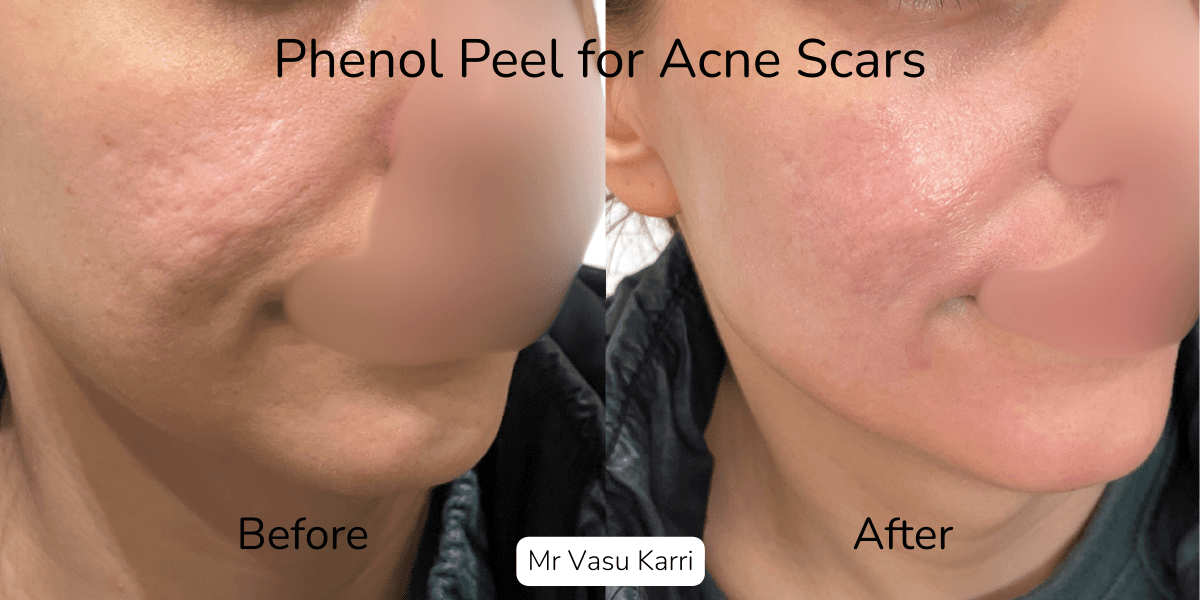
If you are living with deep, long‑standing acne scars, it can feel as though nothing makes much difference. In a clinical trial on post‑acne atrophic scars, a single phenol deep peel produced an average scar improvement of just over 75%, showing that a well‑planned deep chemical peel acne scars protocol can achieve significant change. This guide explains how a phenol peel for acne scars works, who it suits, and how it compares with other acne scar resurfacing options in the UK.
Key Takeaways
| Question | Short Answer |
|---|---|
| What is a phenol peel for acne scars? | A phenol peel is a deep chemical peel using phenol and croton oil to resurface damaged skin and remodel collagen in deep atrophic scars. |
| Is phenol peel a good scar revision treatment option? | Yes, for severe atrophic acne scars in fairer skin types, phenol is considered a strong scar revision treatment with long‑lasting results. |
| Who is not suitable for a phenol peel? | People with darker or black skin tones, certain heart conditions, or unrealistic expectations are usually advised to consider alternative acne scar resurfacing options. |
| How long do results from a deep phenol peel last? | Results can be long‑term because the peel reaches the deeper dermis and stimulates significant collagen remodelling; repeat full‑face phenol peels are rare. |
| Is there an alternative if you are nervous about a full deep peel? | Targeted CROSS (Chemical Reconstruction of Skin Scars) with phenol, microneedling, or TCA peels are common alternatives in an atrophic scar treatment plan. |
| Where can you access phenol peels in the UK? | Mr Karri performs phenol peels at Kinvara Private Hospital, Rotherham, South Yorkshire. |
What Is A Phenol Peel For Acne Scars?
A phenol peel is a type of deep chemical peel that uses a solution containing phenol and croton oil to remove damaged skin layers and stimulate new collagen. It goes deeper than most glycolic or TCA peels you may have heard about in standard skin clinics.
For acne scars, particularly atrophic scars (sunken depressions), phenol can help by reaching the deeper dermis where scar tissue sits. As the skin heals, the new collagen can lift and smooth the scarred areas, making them less visible and evening out texture.
Clinicians often describe phenol as the "gold standard" of deep resurfacing because the results can be dramatic and long‑lasting. It is not a quick facial or light peel; it is a medical procedure usually carried out by a consultant‑level doctor with specific training in phenol formulations.
How Phenol Deep Chemical Peels Work On Acne Scars
Unlike mild peels, a phenol‑croton oil peel reaches the reticular dermis, which is the level where many acne scars are anchored. The controlled injury from the peel causes the upper layers to shed and prompts a strong healing response in deeper layers.
For atrophic scar treatment, this depth is important. The peel can soften sharp edges of boxcar scars, improve rolling scars by tightening the surrounding tissue, and, when combined with CROSS techniques, help ice pick scars as part of a wider programme.
Because phenol is strong, the solution is often adjusted for different areas of the face and different scar patterns. Areas with thicker skin or heavier scarring can tolerate deeper action, while delicate areas like the eyelids require lighter application or avoidance.
Who Is A Good Candidate For A Phenol Peel For Acne Scars?
Phenol peels are usually reserved for people with severe or extensive facial scarring, often where other treatments have given only modest improvement. You will generally need to have fair to light‑medium skin (roughly Fitzpatrick I–III) to reduce the risk of long‑term pigment change.
You should be in good general health, able to follow strict aftercare, and be prepared for several weeks of visible healing. A full medical assessment is essential to check for heart disease, liver problems, or other issues, as phenol can be absorbed systemically during a full‑face peel.
Types Of Acne Scars That May Respond To A Phenol Peel
Atrophic scars (indented scars) are the main focus for phenol peels. This category includes rolling scars, boxcar scars, and, to a degree, ice pick scars, though these very narrow, deep scars usually benefit more from CROSS or punch techniques combined with phenol resurfacing.
Rolling scars, which create wave‑like undulations across the skin, often respond very well to a full‑face peel because the treatment tightens and smooths the entire surface. Boxcar scars, which are wide with defined edges, can soften visibly after deep peeling.
Raised scars (hypertrophic or keloid types) are less commonly treated with phenol peels because they are not a primary resurfacing issue and may worsen with deep peeling. For these, injections, silicone sheeting, or laser are usually safer options.
Comparing Phenol Peels With Other Acne Scar Resurfacing Options
Phenol is not the only resurfacing method, and many of you will have tried or heard of alternatives. TCA peels, particularly at higher strengths for CROSS, are widely used and can be safer for darker skin. Results may be less deep than phenol but still helpful, often with repeat sessions.
Laser resurfacing, such as fractional CO₂ or erbium lasers, can also treat deep scars. Some studies suggest phenol peels achieve similar results to lasers for wrinkles and scars, though lasers may be preferred in certain skin types where pigment control is important.
Microneedling with radiofrequency or combined with platelet‑rich plasma is another option, particularly for people nervous about deep peels or who have darker skin. It does not give the same depth of resurfacing but is safer for more skin types and can be repeated several times over months.
What Happens During A Phenol Peel For Acne Scars?
On the day of treatment, your face is thoroughly cleansed and degreased. The practitioner then applies the phenol–croton oil solution to the scarred areas, either as a full‑face application or zone‑by‑zone, depending on your plan.
You may have sedation or local anaesthetic, especially for larger areas, because the peel can sting and feel uncomfortable. The skin turns white ("frosting") as the chemical acts, and some swelling and tightness happen straight away. The procedure itself usually takes 30 minutes to an hour for typical acne scar cases.
Afterwards, many patients have ointment or a protective dressing applied, and you are given careful aftercare instructions. If you have a deep peel on a large area, you may be monitored for a short while before going home.
Recovery, Aftercare And Downtime
Phenol peel recovery is longer than with lighter peels. You can expect swelling for the first few days, then peeling and crusting for around 7–10 days, followed by a pink or red tone that can last several weeks to months.
Strict sun protection is essential, even in the UK climate. Broad‑spectrum SPF, hats, and avoiding direct sun for the first few months all help to prevent pigmentation issues. Your clinician will usually recommend bland moisturisers, wound‑healing creams, and avoiding picking at flaking skin.
Many people take at least one to two weeks off public‑facing work. Makeup is usually reintroduced after the skin has fully re‑epithelialised and your practitioner has checked that the surface is intact. Redness often continues to improve month by month as collagen remodelling continues underneath.
Source - Frontiers in Medicine 2025, Advances in the Treatment of Acne Scars
Risks, Side Effects And Safety Considerations
Because phenol is powerful, safety is taken very seriously. Risks include prolonged redness, post‑inflammatory hyperpigmentation or hypopigmentation, scarring, and infection. In deeper or full‑face peels, there is also a small risk of heart rhythm disturbance, which is why careful dosing and sometimes heart monitoring are used.
In one modified phenol peel study focusing on acne scars, around 64% of patients achieved more than 51% improvement, but post‑inflammatory hyperpigmentation occurred in about 74% of acne‑scar cases, especially in Asian skin types. Source - Exoderm: Modified phenol peel on facial wrinkles and acne scars This underlines why most UK practitioners keep phenol peels for lighter skin tones and plan pigment‑control strategies.
To keep risk low, your clinician will usually carry out patch tests or use phenol in a staged way for some patients. Stopping smoking, controlling any underlying conditions, and following every aftercare step all contribute to better healing and a lower chance of scarring or infection.
Phenol CROSS And Combination Approaches For Atrophic Scar Treatment
Many of you will not need a full‑face phenol peel. Instead, targeted phenol CROSS (Chemical Reconstruction Of Skin Scars) is often used as part of a scar revision treatment plan. This involves applying very high‑strength phenol directly into individual scars with a fine applicator.
Studies show that phenol CROSS can give improvements similar to high‑strength TCA CROSS in ice pick and boxcar scars, though comfort and healing profiles differ. Localised 89% phenol "ring paint" has also been used successfully for boxcar and polymorphic scars, improving depth and texture. Source - Rullan & Rullan, carbolic acid ring paint for boxcar/polymorphic acne scars
Combination treatment is common. For example, you may have subcision to release tethers, microneedling for general collagen stimulation, and phenol or TCA CROSS on the deepest scars, followed by a lighter peel for blending. This phased approach can give a smoother finish without always needing a single, very aggressive procedure.
Where In The UK Can You Access Phenol Peels For Acne Scars?
Phenol peels are niche procedures in the UK and are usually carried out by consultant plastic surgeons or dermatologists with specific experience in phenol‑croton oil formulations. Mr Karri at Kinvara Private Hospital offers this treatment with comprehensive assessment and aftercare support.
When choosing a clinic, you may wish to ask how many phenol peels they perform each year, what proportion are for acne scars, and to see before‑and‑after photographs. It is also sensible to ask who handles follow‑up and how urgent concerns are managed outside normal hours.
Frequently Asked Questions About Phenol Peels For Acne Scars
Many of you have similar questions before committing to any deep peel. These answers cover points that may not have been addressed earlier.
1. Can a phenol peel remove acne scars completely?
A phenol peel can make deep scars much less noticeable and may give around 50–75% average improvement in well‑selected patients, but complete removal is rare. You should expect realistic, noticeable smoothing rather than a "perfect" finish.
2. How long should you wait after finishing isotretinoin before a phenol peel?
Many UK clinicians prefer to wait at least 6–12 months after stopping isotretinoin before any deep chemical peel for scarring. This aims to reduce the risk of abnormal healing and scarring.
3. Is a phenol peel for acne scars painful?
During treatment, strong stinging or burning is common, so clinics use local anaesthetic, strong topical anaesthetic, or sedation. The first few days of healing can feel tight and sore, but pain is usually manageable with prescribed medication.
4. Can phenol peels be repeated if you want more improvement?
Full‑face deep phenol peels are rarely repeated because of their depth. Targeted phenol CROSS or other resurfacing methods are usually used later if further refinement is needed.
5. Are phenol peels safe for darker skin?
Deep phenol peels are generally not recommended for dark or black skin because of the high risk of long‑term pigment changes and scarring. For these skin types, clinicians often prefer microneedling, radiofrequency, or cautious medium‑depth peels.
6. How soon will you see the final result on your scars?
You will see initial improvement once the surface has healed at 2–3 weeks, but acne scars continue to improve for 6–12 months as deeper collagen remodelling settles.
7. Can you have phenol peel for acne scars if you still get active spots?
Phenol peels are usually carried out once active acne is well controlled. Continuing breakouts can interfere with healing and risk new scars while you are recovering.
Conclusion
A phenol peel for acne scars is one of the strongest chemical peel for scarring options available and can provide meaningful, long‑term improvement for deep atrophic scars. It sits within a wider toolkit that includes phenol CROSS, subcision, microneedling, and TCA‑based approaches, and it works best when matched carefully to your scar pattern and skin type.
If you are considering this level of treatment in the UK, a consultation with Mr Karri at Kinvara Private Hospital is essential. They can assess your scars, talk through realistic outcomes, explain recovery in detail, and help you weigh phenol against other acne scar resurfacing options that may suit your skin and lifestyle.
Mr Karri's phenol peel practice draws patients nationwide, serving patients from major cities and towns across England, Scotland, and Wales:
Bedfordshire | Berkshire | Bristol | Buckinghamshire | Cambridgeshire | Cheshire | Cornwall | County Durham | Cumbria | Derbyshire | Devon | Dorset | East Sussex | Essex | Gloucestershire | London | Manchester | Hampshire | Herefordshire | Hertfordshire | Kent | Lancashire | Leicestershire | Lincolnshire | Merseyside | Norfolk | North Yorkshire | Northamptonshire | Northumberland | Nottinghamshire | Oxfordshire | Shropshire | Somerset | South Yorkshire | Staffordshire | Suffolk | Surrey | Tyne and Wear | Warwickshire | West Midlands | West Sussex | West Yorkshire | Wiltshire | Worcestershire | Birmingham | Leeds | Sheffield | Liverpool | Newcastle | Nottingham